
9 min read / Updated 2026-09-04
Prepared by the WireTorque catalog team
Brake Lights Not Working but Tail Lights Work: Stop Lamp Wiring Diagnosis
A practical stop-lamp diagnostic guide for brake lights that do not work while tail lights still operate, covering brake switch power, fuses, BCM or relay output, rear lamp connectors, grounds, and trailer wiring faults.
Use the symptom to split the circuit
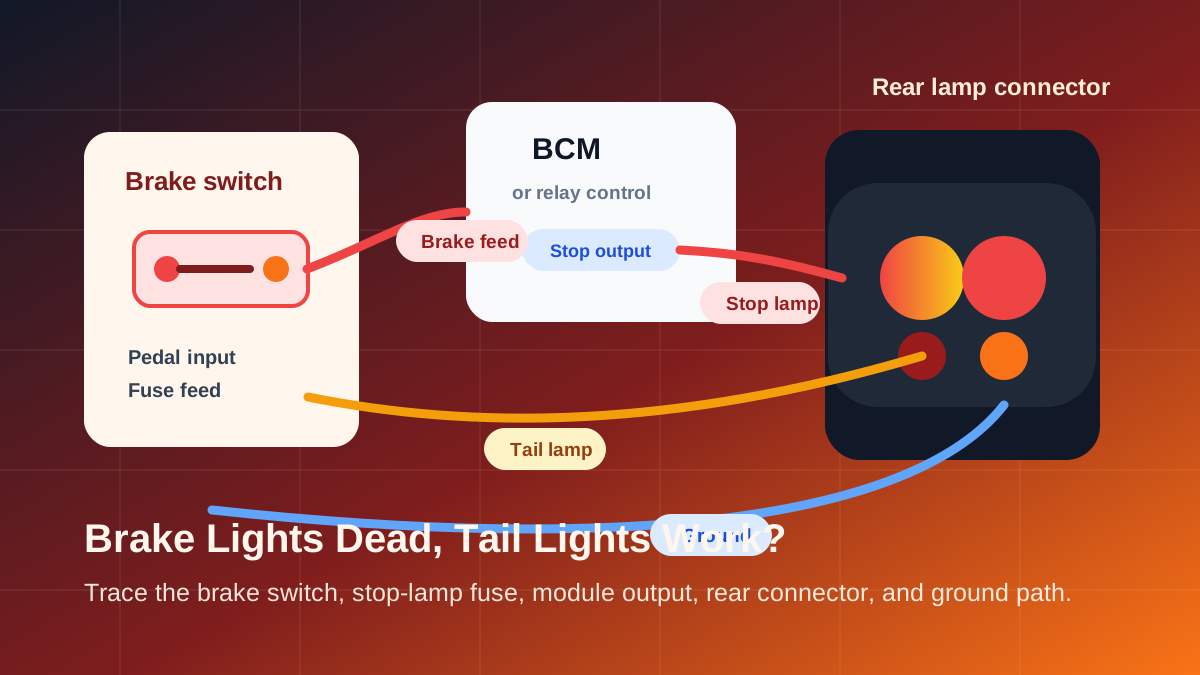
Tail lights and brake lights may share the same rear lamp housing, but they are usually separate circuits. A working tail lamp proves the bulb housing and some ground path may be alive, but it does not prove the brake switch feed, stop-lamp fuse, body control output, or brake lamp branch.
Start by confirming whether all brake lights are out, only one side is out, or the high-mounted stop lamp still works. That detail tells you whether the fault is before the split, after the split, or limited to one lamp branch.
Check brake switch power and output
The brake pedal switch is still the first high-value test point on many vehicles. Some systems use a simple switch output; others send a pedal input to a body control module, lighting module, or powertrain module before the lamps are powered.
Use the wiring diagram to identify brake switch feed, switched output, reference voltage, ground, and any dual-contact brake switch arrangement. A scan tool brake-pedal status can help, but the wiring diagram tells you where to prove the electrical path.
Follow BCM, relay, or lamp module control
Modern stop lamps may be controlled by a BCM or rear lighting module. If the brake switch signal is present but no lamp output leaves the module, check module power feeds, grounds, fuses, and connector terminals before condemning the module.
If the circuit uses a relay, separate the relay coil side from the relay load side. A relay click does not prove the stop-lamp feed is leaving the relay contacts under load.
Inspect rear lamp connectors and grounds
If only one side is out, move toward that rear lamp connector, bulb socket, harness branch, and ground. Heat damage, water intrusion, loose terminals, and previous collision repair are common around rear lamp assemblies.
Use voltage-drop testing with the brake lamps commanded on. A ground or feed that looks acceptable with no load can fail when the lamp current is actually flowing.
Check trailer wiring and added accessories
Aftermarket trailer wiring, alarm systems, camera wiring, and body repair splices can interrupt stop-lamp circuits. If the problem began after an accessory install or hitch wiring repair, inspect that branch before replacing factory parts.
Trailer converter boxes can also short or backfeed the brake lamp circuit. Use the diagram to separate the vehicle stop-lamp path from the trailer tap or tow-module output.
When exact vehicle diagrams matter
A generic brake light diagram is useful for understanding the idea, but it cannot show the exact fuse, connector cavity, module pin, splice, or ground point for one vehicle. That is where an exact year, make, model, and system diagram becomes the practical tool.
Choose a single exterior lights package when the fault is clearly brake lamp related. Choose a full vehicle package when the fault crosses body control, power distribution, trailer wiring, warning systems, or shared grounds.
Questions buyers ask
Why do tail lights work but brake lights do not?
The tail lamp circuit and stop-lamp circuit are usually separate. Common causes include a bad brake switch, blown stop-lamp fuse, missing BCM output, bad relay contact, connector damage, trailer wiring fault, or open brake lamp branch.
Does a working third brake light change the diagnosis?
Yes. If the high-mounted stop lamp works but left and right brake lamps do not, the brake switch input may be working and the fault may be after the circuit split, in a module output, rear lamp branch, fuse, splice, or connector.
Can a trailer wiring fault stop vehicle brake lights?
Yes. A shorted trailer converter, damaged tow connector, or poor splice can affect the stop-lamp circuit, especially after hitch wiring or rear body repair.
Should I replace the brake light switch first?
Test it first. The wiring diagram shows the switch feed and output terminals so you can confirm whether the switch is actually missing output before replacing it.