
6 min read / Updated 2026-09-02
Prepared by the WireTorque catalog team
Trailer Lights Have No Power: Fuse, Connector, and Ground Wiring Checks
A short diagnostic note for trailer running lights, brake lights, and turn signals with no power, covering tow-vehicle fuses, 4-pin and 7-pin connectors, grounds, and voltage-drop checks.
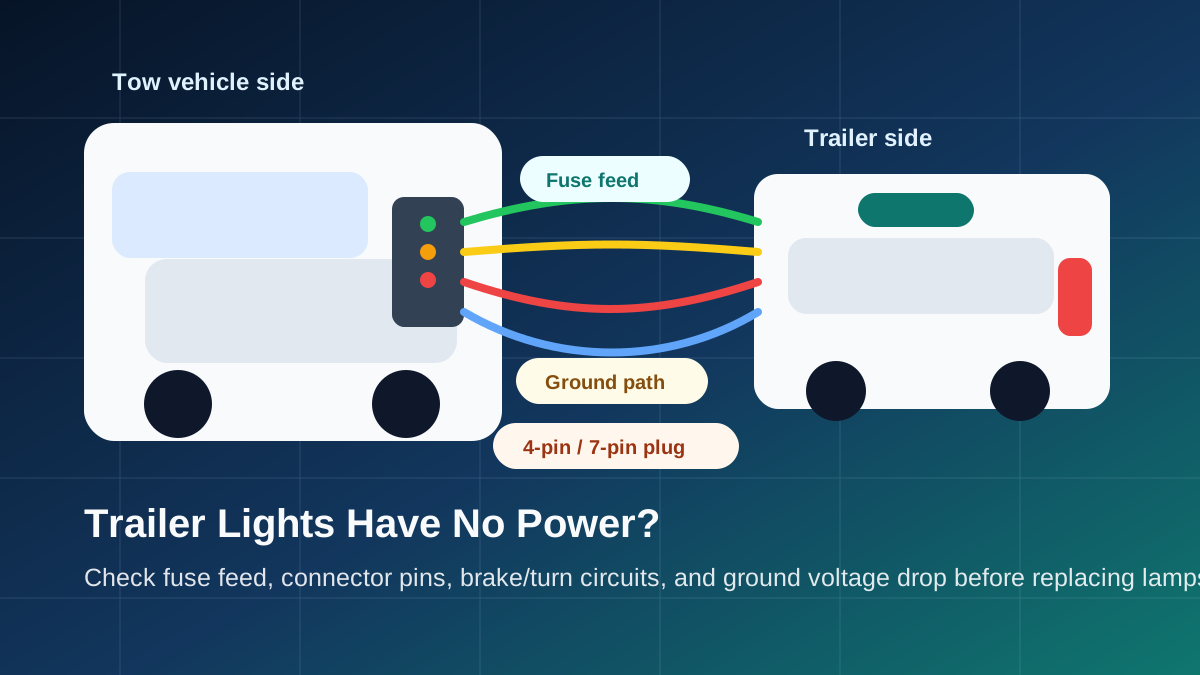
Start on the tow vehicle side
If all trailer lamps are dead, begin at the tow vehicle connector before opening the trailer harness. A missing fuse feed, failed trailer relay, disabled tow module, or corroded socket can remove power from every lamp.
Use the wiring diagram to identify the trailer running lamp feed, left turn and brake output, right turn and brake output, reverse lamp output where fitted, battery charge feed, and connector ground.
Do not trust wire color alone
Trailer connectors often follow common color conventions, but previous repairs, adapter harnesses, and aftermarket tow packages can change the circuit layout. The correct connector view matters more than a generic color chart.
Confirm whether the vehicle uses a 4-pin flat connector, 7-pin round connector, factory tow module, or aftermarket converter box. Each layout changes the correct test points.
Check the ground under load
A weak trailer ground can look like no power, dim lamps, backfeeding, or lamps that work only when another light is switched on. A no-load meter reading may look normal while the circuit fails under real lamp current.
Voltage-drop test the ground side with the lamps commanded on. The diagram helps locate the connector ground, frame ground, lamp grounds, and any shared splice points.
Separate vehicle fault from trailer fault
If the tow connector has correct output at each pin, move to the trailer plug and lamp branches. If the tow connector output is missing, stay on the vehicle side and inspect fuses, relays, body control module output, tow module power, and connector corrosion.
This separation prevents replacing trailer lamps when the fault is actually a vehicle fuse or tow-module feed.
When to use a full vehicle package
A single exterior-lights diagram is usually enough for basic trailer running light, brake light, or turn signal faults. Choose a broader package when the vehicle uses a body control module, trailer tow module, power distribution relay, or shared ground network.
Full packages are also useful after collision repair, water intrusion, harness replacement, or repeated fuse failures where the lighting fault crosses multiple systems.
Questions buyers ask
Why do my trailer lights have no power at the plug?
Common causes include a blown trailer fuse, failed relay, tow module fault, corroded socket, missing ground, damaged harness, or an aftermarket converter box problem.
Can a bad ground make trailer lights look dead?
Yes. A weak or open trailer ground can stop lamps from lighting or cause dim, backfeeding, or intermittent operation.
Should I test a 4-pin and 7-pin trailer plug the same way?
No. The circuits and pin positions differ. Use the correct connector view before testing power, ground, brake, turn, marker, reverse, or charge circuits.
Is the trailer wiring diagram enough if the tow module is not working?
You may also need power distribution, body control module, ground distribution, and data line information when the vehicle uses a factory tow module.