
6 min read / Updated 2026-09-26
Prepared by the WireTorque catalog team
2007 Ford Focus Fuse Box Diagram: Trace a Dead Electrical Circuit
A focused repair note for a 2007 Ford Focus circuit with no power, covering the correct fuse-panel path, both-side fuse testing, battery and ignition feeds, loaded voltage-drop checks, and safe short-circuit diagnosis.
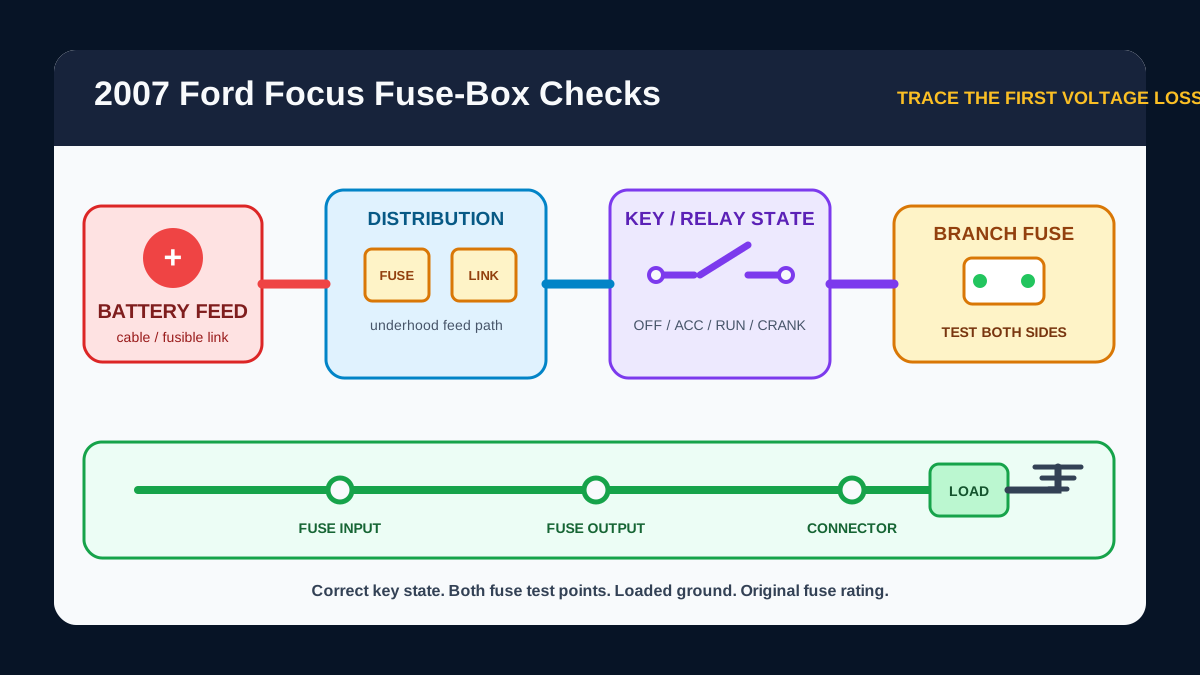
Define the dead circuit and the key state
Record exactly what does not work and whether the fault occurs with the key off, in accessory, in run, during crank, or with the engine running. A fuse can have battery power at all times, receive power only through the ignition switch, or be energized by a relay after a module command.
Confirm the exact vehicle configuration before using a fuse-box illustration. Equipment and circuit routing can differ, so identify the protected circuit in the wiring diagram instead of selecting a fuse only because its label sounds related.
Test both sides of the fuse in the correct state
Use the exposed test points on the fuse where available and check both sides while the circuit should be active. Power on one side only indicates an open fuse. No power on either side means the fault is upstream or the circuit is not being commanded on.
A visual check is not enough. A fuse element can crack where it is difficult to see, and an empty or incorrectly identified cavity can lead the diagnosis in the wrong direction. Keep the original fuse rating installed unless the approved test procedure requires removal.
Trace the feed before replacing the load
If the fuse has no supply, follow the power-distribution diagram toward the battery feed, fusible link, ignition-switch output, relay contact, splice, or connector that supplies it. Divide the path at documented test points until the first section with missing voltage is found.
If both fuse test points have power, continue downstream toward the switch, module, connector, and load. Test the ground under load as well; a meter can show supply voltage while a corroded ground prevents enough current from flowing.
Treat a repeatedly blown fuse as a short, not a rating problem
If a replacement fuse opens again, stop installing fuses and inspect the protected branches for rubbed insulation, water intrusion, heat damage, trapped harnesses, incorrect accessories, or a failed load. Disconnect branches only when the diagram identifies them clearly.
Never install a higher-rated fuse and never bridge unidentified relay terminals. After repair, reproduce the original operating state, confirm stable voltage at both sides of the fuse, and verify that related circuits operate without heating, flicker, or repeated fuse failure.
Questions buyers ask
How do I know which 2007 Ford Focus fuse box to check?
Start with the exact power-distribution diagram for the failed circuit. It identifies the supplying fuse or relay path and prevents confusion between panels or similarly named circuits.
Why is there no power on either side of a good fuse?
The circuit may be in the wrong key or command state, or the upstream battery feed, fusible link, ignition output, relay contact, splice, or connector may be open. Trace the supply path in the diagram.
Can I fit a larger fuse if the correct fuse keeps blowing?
No. A larger fuse can allow the wiring to overheat. Diagnose the shorted wire, connector, accessory, or load while retaining the specified fuse rating.