
6 min read / Updated 2026-09-19
Prepared by the WireTorque catalog team
Turn Signal Flashes Fast on One Side: Bulb Load, Ground, and BCM Checks
A focused repair note for one turn signal that flashes too fast, covering failed or incorrect bulbs, LED load mismatch, lamp sockets, shared grounds, trailer splices, BCM outputs, and connector voltage-drop checks.
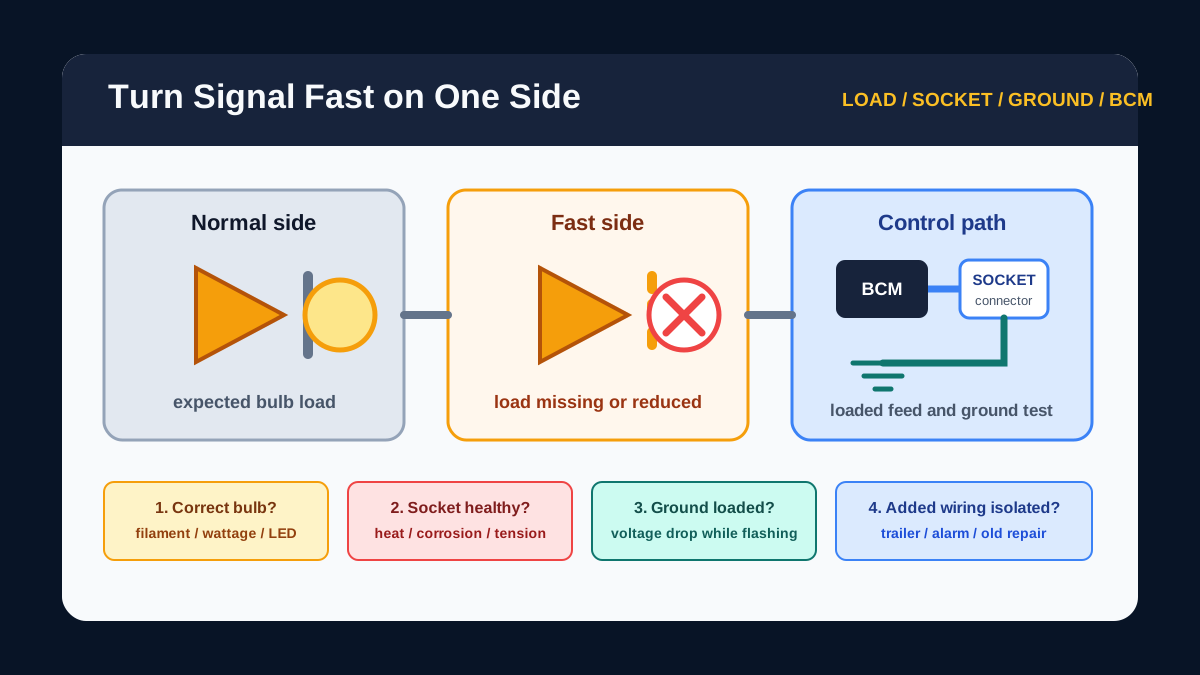
Compare the fast side with the normal side
Turn on the left and right signals and record which lamps illuminate, how bright they are, and whether the dashboard indicator behaves differently. One dark or dim lamp gives a faster starting point than replacing the flasher blindly.
Also test the hazard lamps. If hazards operate normally but one turn direction flashes fast, the fault may be in a side-specific bulb, socket, harness branch, switch input, or body-module output.
Confirm bulb type and LED load
A burned-out filament or incorrect low-wattage bulb reduces circuit load and can trigger fast flashing. Compare the bulb number, wattage, contact arrangement, and socket orientation with the correct specification for the vehicle.
LED replacements draw much less current than incandescent bulbs. Some vehicles need compatible lamps, a properly engineered load interface, or coding. Do not add a hot resistor against plastic or wiring without a safe installation plan.
Inspect the socket, connector, and shared ground
Look for corrosion, heat discoloration, loose terminals, water entry, spread contacts, or a bulb that changes brightness when the socket is moved. A damaged socket can open the circuit or add enough resistance to change module load detection.
A weak shared ground can make the turn lamp dim, backfeed through a tail or brake filament, or cause several rear lamps to flash together. Measure ground-side voltage drop while the lamp is operating rather than relying only on continuity.
Disconnect trailer and accessory splices
Trailer converters, tow sockets, alarm systems, and previous lighting repairs are common places for corrosion, poor crimps, crossed circuits, and unexpected load changes. Temporarily isolate added equipment when it can be done safely, then compare flash rate again.
Use the wiring diagram to find the original branch and splice locations. Repair the cause with sealed connections and correct routing instead of twisting wires together or increasing fuse size.
Know whether the vehicle uses a flasher or BCM
Older circuits may use a removable thermal or electronic flasher. Many newer vehicles command turn lamps through a body control module and detect lamp current electronically, so there may be no separate flasher relay to replace.
If bulbs, sockets, grounds, and added wiring test correctly, use the exact diagram and connector view to identify switch inputs, BCM outputs, fuse feeds, and ground paths. Confirm command and loaded output before condemning the module.
Questions buyers ask
Why does my turn signal flash fast on only one side?
That side may have a failed bulb, incorrect bulb, LED load mismatch, damaged socket, open harness branch, weak ground, trailer-wiring fault, or body-module load-detection issue.
Can an LED bulb make a turn signal flash fast?
Yes. An LED can draw less current than the circuit expects, causing hyperflash. Use a compatible solution for the vehicle rather than installing an unsafe resistor or larger fuse.
Can a bad ground cause fast flashing?
Yes. A high-resistance or open ground can reduce lamp current, dim the bulb, or create backfeeding through other lamp circuits. Test voltage drop while the signal is operating.
Does every vehicle have a turn-signal flasher relay?
No. Many modern vehicles use body control module outputs and electronic load monitoring, so the exact wiring diagram is needed before looking for a separate flasher relay.