
6 min read / Updated 2026-09-05
Prepared by the WireTorque catalog team
Shift Interlock Stuck in Park: Brake Switch and Solenoid Wiring Checks
A short diagnostic note for a gear shifter stuck in Park, covering brake switch input, stop-lamp fuse feed, park position signal, BCM or relay release output, shift lock solenoid, and ground checks.
Confirm the brake lights first
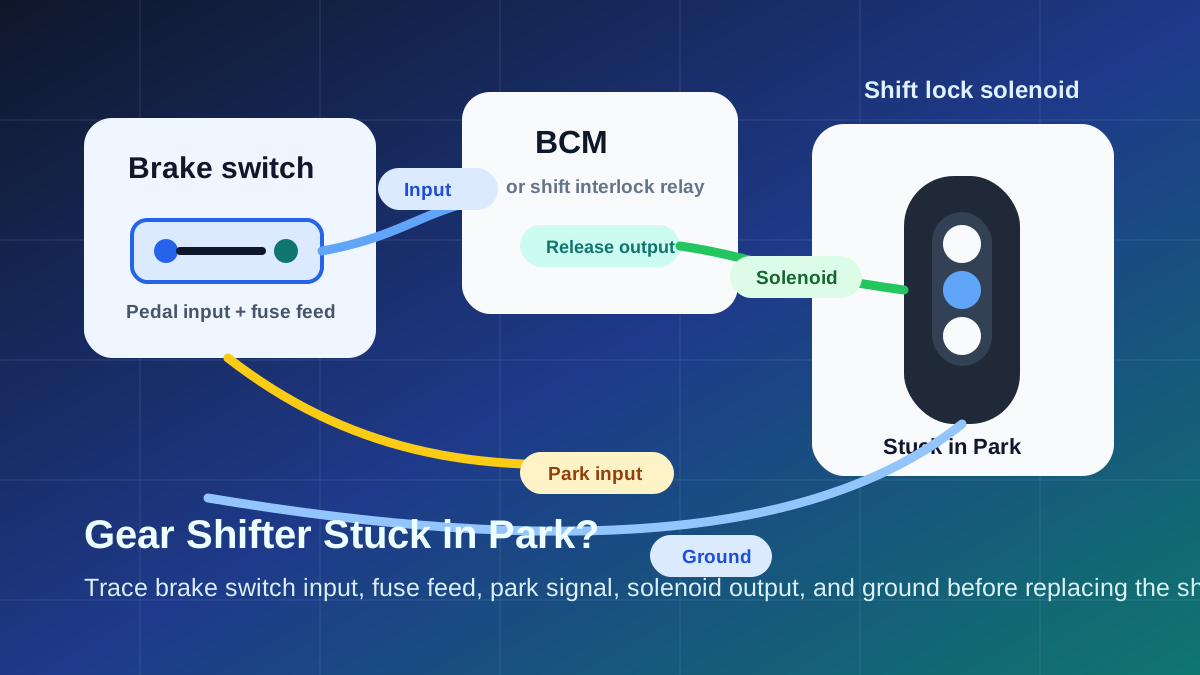
Many shift interlock systems use the brake pedal signal before releasing the shifter. If the brake lights do not work, the shift lock problem may begin at the brake switch, stop-lamp fuse, or brake-pedal input circuit.
If the brake lights work normally but the shifter stays locked, move deeper into the interlock release circuit instead of replacing the brake switch automatically.
Identify the release control design
Some vehicles use a simple brake switch and shift lock solenoid. Others route the request through a body control module, transmission range signal, park position switch, or shift interlock relay.
The wiring diagram tells you whether the solenoid receives direct power, switched ground, relay output, or a module-controlled release command.
Test the solenoid only at known pins
The shift lock solenoid connector may sit close to illumination, park switch, key interlock, and console harness circuits. Guessing at the connector can create wrong-pin testing and unnecessary damage.
Use the connector view to identify solenoid feed, solenoid ground or command, park position input, and any shared console harness ground before probing.
Separate mechanical bind from electrical failure
A sticky shifter, spilled liquid, damaged console, or cable adjustment issue can mimic an electrical interlock fault. If the release command and ground are correct at the solenoid, inspect the mechanical release path.
If command is missing, stay on the electrical side: fuse feed, brake input, BCM output, relay control, park signal, and connector condition.
Use a full package when systems overlap
A single shift interlock diagram is enough for many stuck-in-Park faults. A full package is useful when the symptom crosses brake lights, body control, transmission range, warning lamps, starter inhibit, or power distribution.
That broader view helps when one brake switch signal feeds several modules and the vehicle has more than one brake-pedal or park-position circuit.
Questions buyers ask
Can a bad brake light switch keep the shifter stuck in Park?
Yes. If the shift interlock system depends on brake switch input, a missing brake signal can prevent shifter release.
Why do brake lights work but the shifter is still locked?
The brake lamp side may work while the interlock input, BCM command, relay output, solenoid feed, park signal, or ground path still has a fault.
Should I replace the shifter assembly first?
No. Confirm release command, solenoid feed, ground, connector condition, and mechanical movement before replacing the shifter assembly.
Does the shift interlock need a wiring diagram?
Yes. The diagram shows whether the circuit is controlled by a brake switch, relay, BCM, park position input, or shared fuse and ground path.