
6 min read / Updated 2026-09-12
Prepared by the WireTorque catalog team
Reverse Lights Not Working: Range Switch, BCM Output, and Rear Lamp Checks
A short repair note for reverse lights that do not turn on, covering fuse feed, transmission range switch or BCM input, reverse lamp output, rear connector, bulb socket, and ground checks.
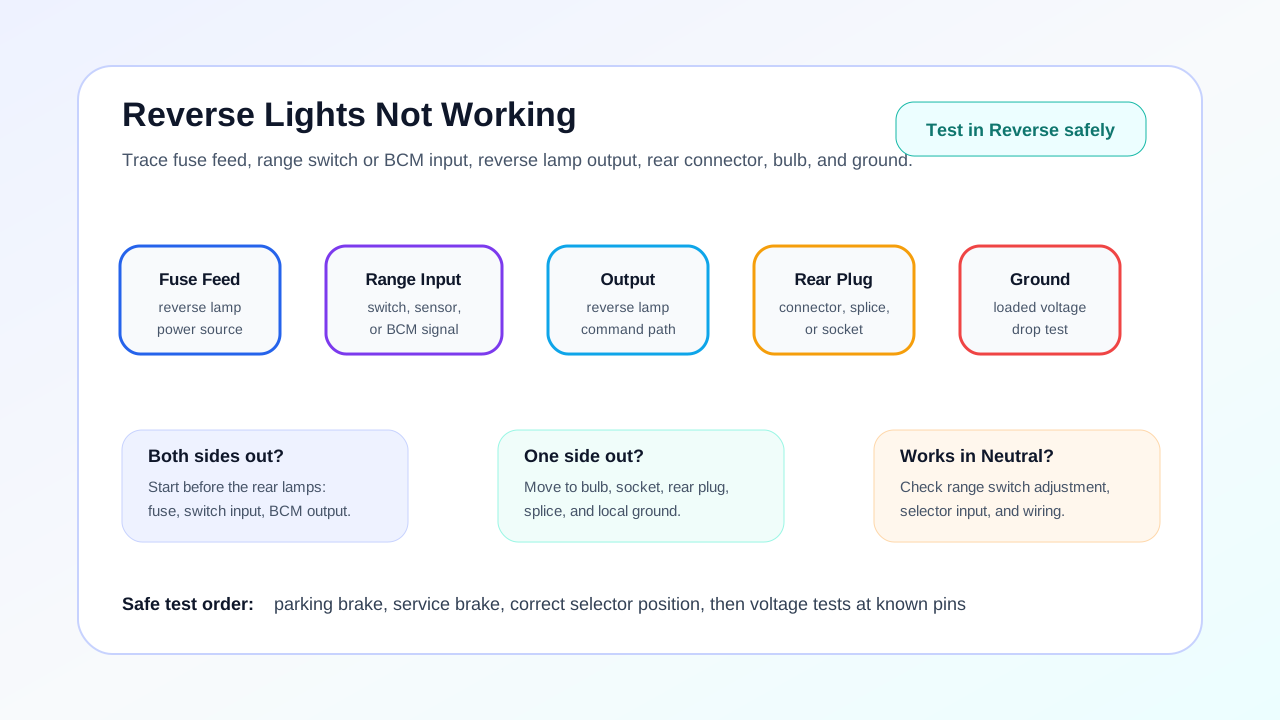
Separate both-lamp faults from one-side faults
If both reverse lamps are out, start upstream: reverse lamp fuse feed, transmission range switch, park-neutral position input, BCM command, reverse lamp relay, or shared output wire.
If only one reverse lamp is out, move toward that rear lamp branch: bulb, socket tension, rear connector, local splice, water intrusion, previous collision repair, or ground path.
Confirm how the vehicle knows it is in Reverse
Older vehicles may route reverse lamp power through a mechanical range or backup-lamp switch. Newer vehicles may send gear position to the BCM, PCM, TCM, or instrument network before the reverse lamps are powered.
The wiring diagram shows whether the reverse light circuit is direct-switch controlled, relay controlled, BCM controlled, or dependent on transmission range data.
Use safe selector-position testing
Reverse-light diagnosis can require the key on and selector in Reverse. Keep the parking brake applied, hold the service brake, block the wheels when appropriate, and follow safe shop procedure before testing.
Do not back-probe random transmission connectors. Use the connector view to identify range switch signal, reverse lamp output, fuse feed, and ground pins before measuring.
Check voltage under load at the rear lamp
A rear connector may show voltage with the bulb removed and still fail when the bulb draws current. That points to high resistance in the feed, socket, splice, connector, or ground.
Use voltage-drop testing with the bulb connected when possible. The diagram gives the correct feed and ground path so the test is measuring the actual reverse lamp circuit.
Look for overlap with camera or parking systems
Some vehicles use the reverse signal for backup camera, parking sensors, mirrors, trailer modules, or infotainment inputs. A missing reverse signal can create more symptoms than dead bulbs.
If reverse lamps and another reverse-related feature fail together, open the related body control, transmission, or rear-body diagrams instead of treating the lamp circuit alone.
Questions buyers ask
Can a bad range switch stop reverse lights?
Yes. If the reverse lamp circuit depends on range switch position, a bad switch, adjustment issue, connector fault, or missing range signal can stop the reverse lights.
Why are both reverse lights out at the same time?
Both lamps out usually points to a shared upstream issue such as fuse feed, range input, BCM output, relay, shared splice, or common ground.
Why does only one reverse light fail?
One side out usually points to the bulb, socket, rear connector, local harness branch, water damage, or ground path on that side.
Do reverse lights need a transmission diagram?
Often yes. Many reverse lamp circuits start with transmission range, park-neutral, TCM, PCM, or BCM inputs before power reaches the rear lamps.