
9 min read / Updated 2026-09-11
Prepared by the WireTorque catalog team
A/C Compressor Clutch Not Engaging: Relay, Pressure, and PCM Wiring Checks
A diagnostic case file for an A/C compressor clutch that will not engage, covering HVAC request, pressure switch or sensor input, PCM approval, relay control, clutch coil feed, and ground testing.
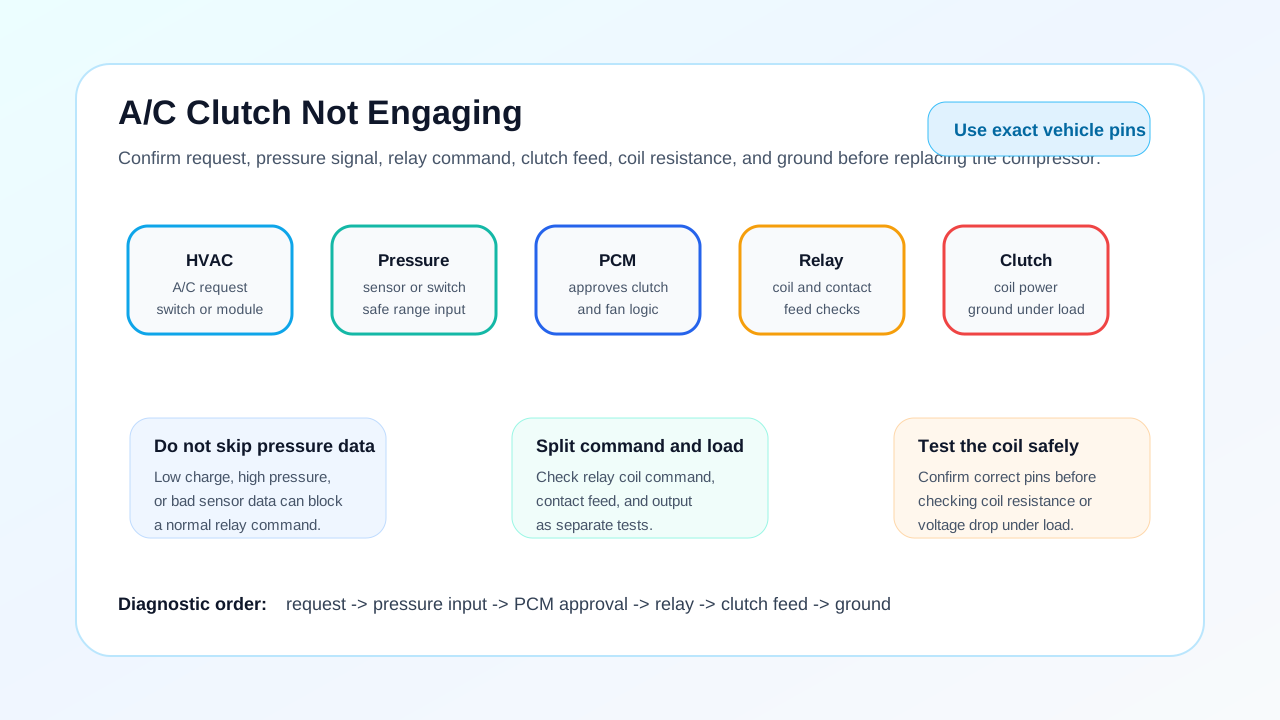
Start with request and pressure approval
A compressor clutch that does not engage is not automatically a bad compressor. The control side may be blocking clutch operation because the HVAC panel did not request A/C, the pressure switch is open, the pressure sensor signal is outside the allowed range, or the PCM is withholding approval.
Before testing the clutch connector, use the diagram to identify whether the vehicle uses a simple pressure switch, a three-wire pressure sensor, a relay controlled by the PCM, or a direct module-controlled clutch output.
Separate the relay coil from the relay contact
Many wrong A/C repairs happen because the relay is treated as one circuit. The coil side may have command and ground while the contact side is missing battery feed, or the contact side may have feed while the PCM never grounds the coil.
Use the wiring diagram to split the relay into terminal feed, terminal output, coil power, and coil command. This shows whether the fault is upstream control, relay contact, fuse feed, or downstream clutch wiring.
Check the clutch coil only after confirming the pins
The compressor area can include clutch coil wires, pressure sensor wires, fan wiring, alternator wiring, and engine harness branches. Testing the wrong connector can create a false result or damage a control circuit.
Use the connector view to identify clutch feed and clutch ground. Then check for voltage during an approved A/C request, confirm ground under load, and compare clutch coil resistance only against the correct service specification.
Do not ignore cooling fan and engine inputs
On many vehicles, A/C operation is tied to radiator or condenser fan command. If the fan cannot run, the PCM may reduce or block compressor engagement to protect the system.
The same logic can apply to engine temperature, wide-open throttle, idle control, high pressure, low pressure, or a stored module condition. This is why A/C, cooling fan, engine performance, and power distribution diagrams may need to be read together.
Use voltage drop when power looks present
A clutch connector may show voltage with the connector unplugged, then fail when the coil is connected and current flows. That points to high resistance in the fuse, relay contact, connector, splice, or ground path.
Voltage-drop testing under load is the clean way to prove whether the feed side or ground side is weak. The wiring diagram tells you where each test point belongs instead of guessing along the harness.
When a full package is more useful than one system
A single A/C diagram is usually enough for compressor clutch diagnosis. Choose a full vehicle package when the issue crosses cooling fan operation, PCM command, power distribution, ground distribution, engine sensor inputs, or previous front-end repair.
That broader view helps when a shared fuse, relay center, ground point, or module input affects more than the A/C clutch alone.
Questions buyers ask
Can I jump the A/C compressor clutch to test it?
Only when the correct service procedure allows it and pressure conditions are safe. A wiring diagram identifies the clutch circuit, but refrigerant pressure and mechanical safety still matter.
Why does the relay click but the A/C clutch still not engage?
The relay coil can click while the contact side has burned contacts, missing fuse feed, weak output, high resistance, or a downstream clutch feed or ground problem.
Can low refrigerant stop the compressor clutch?
Yes. Many systems use a pressure switch or pressure sensor to block compressor operation when pressure is too low or too high.
Should I replace the compressor if the clutch has no power?
No. Missing clutch power usually points to request, pressure input, PCM approval, relay, fuse, wiring, connector, or ground checks before compressor replacement.